A lot of people hate the fact Barbie is supposedly modeled after a sexy German adult cartoon later turned sex doll, Bild Lilli. The doll was based on a “gold digging prostitute” and some people believe that Barbie still represents that image. And when you see Barbie looking like she does in front of The Palms Hotel, you can see their point. |
||||||||||||||
This ad for the Barbie Shopping Boutique, demonstrates to young girls that as long as they look good in their skimpy outfits, they should just “Buy it!” because “You never run out of money!”The left is a drawing of how Barbie would look compared to a real woman. That unachievable image of perfection could be detrimental to a young girl’s self-esteem, and as living proof of what that obsession could build up to is Cindy Jackson on the right.
Barbie and Her Other Controversies
Mattel and Nabisco put their special talents together in 1997, and came out with “Oreo Fun Barbie”. Just like the cookie, girls could share and play with their doll after class. However, the African American version of the same doll struck-up controversy due to the derogatory nature of the term “Oreo” in the African American community. Needless to say the doll was pulled from the shelves. |
One of the main reasons that people are so anti-Barbie is due to the fact that she reinforces the ideology that to be “beautiful” you need to look like a perfectly sculpted plastic doll. (In 1965 Barbie was sold with a scale set to 110lbs. and a diet book titled "How to Lose Weight"). Parents are concerned that their little girls will become body image oriented and it could affect them long-term. This fear becomes a reality for many who are afflicted with “Barbie Syndrome”(a desire to obtain an unrealistic body). Another of Barbie's flaws is her less than modest example that she sets for children.
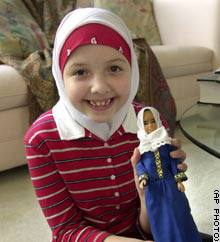
Mattel is also criticized by the fact that until just recently, all the races of Barbie have been just one, white. Sure the first African American doll (Colored Francie) debuted in 1967, but she had the same features as the white Francie with only a different skin color to differentiate to two. African American girls didn’t have a Barbie that they could truly identify with. In 2009, Mattel attempted to change that, and they came out with the “So in Style” line of Barbie’s new black friends. Their fuller lips, wider noses, and varying skin tones are considered by many to be a step in the right direction; however, improvements can still be made. The hair of most of the dolls are straight and long, and they are accompanied by straightening tools for their hair, which perpetuates the idea that natural, curly hair is an issue that needs to be fixed in order to be “beautiful”.
 |
|||||||||||||